PIERING
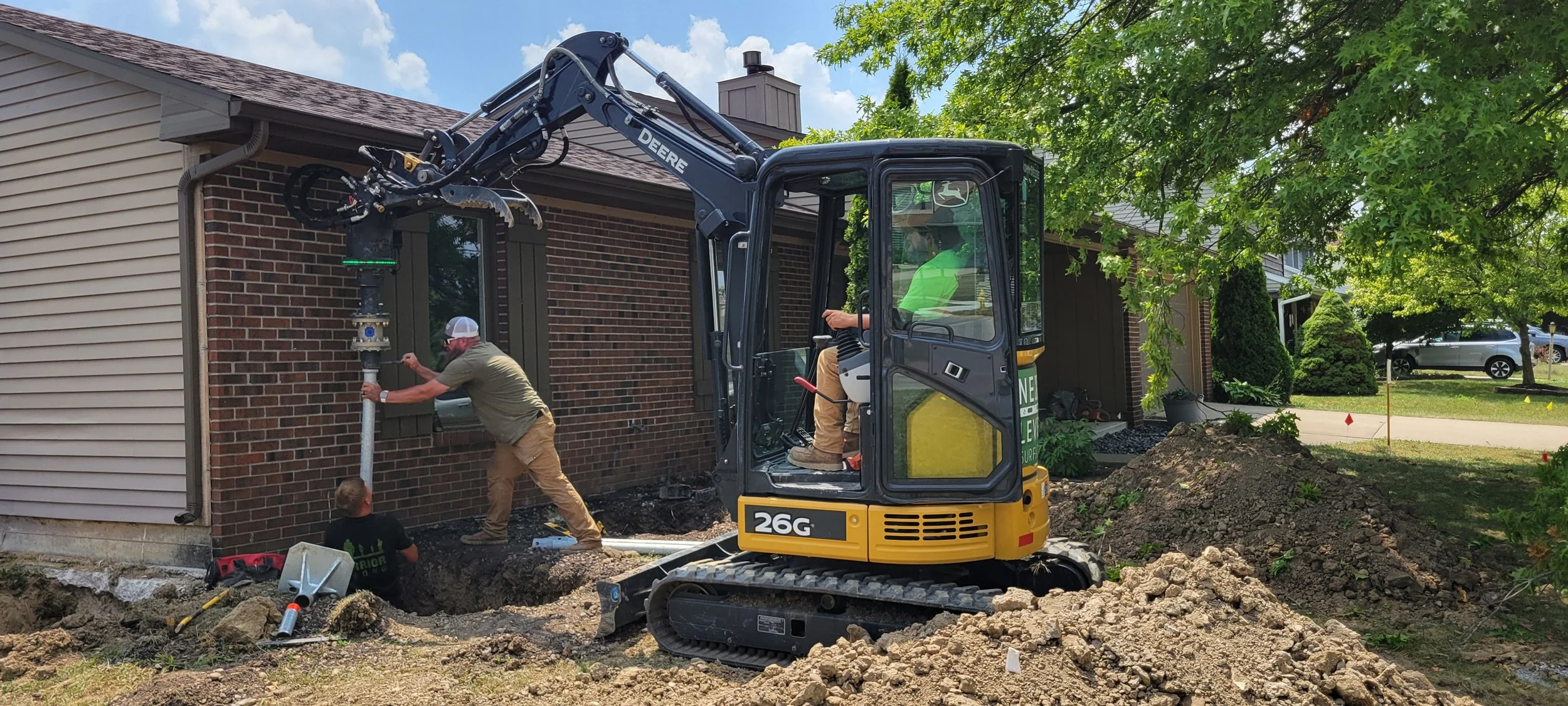
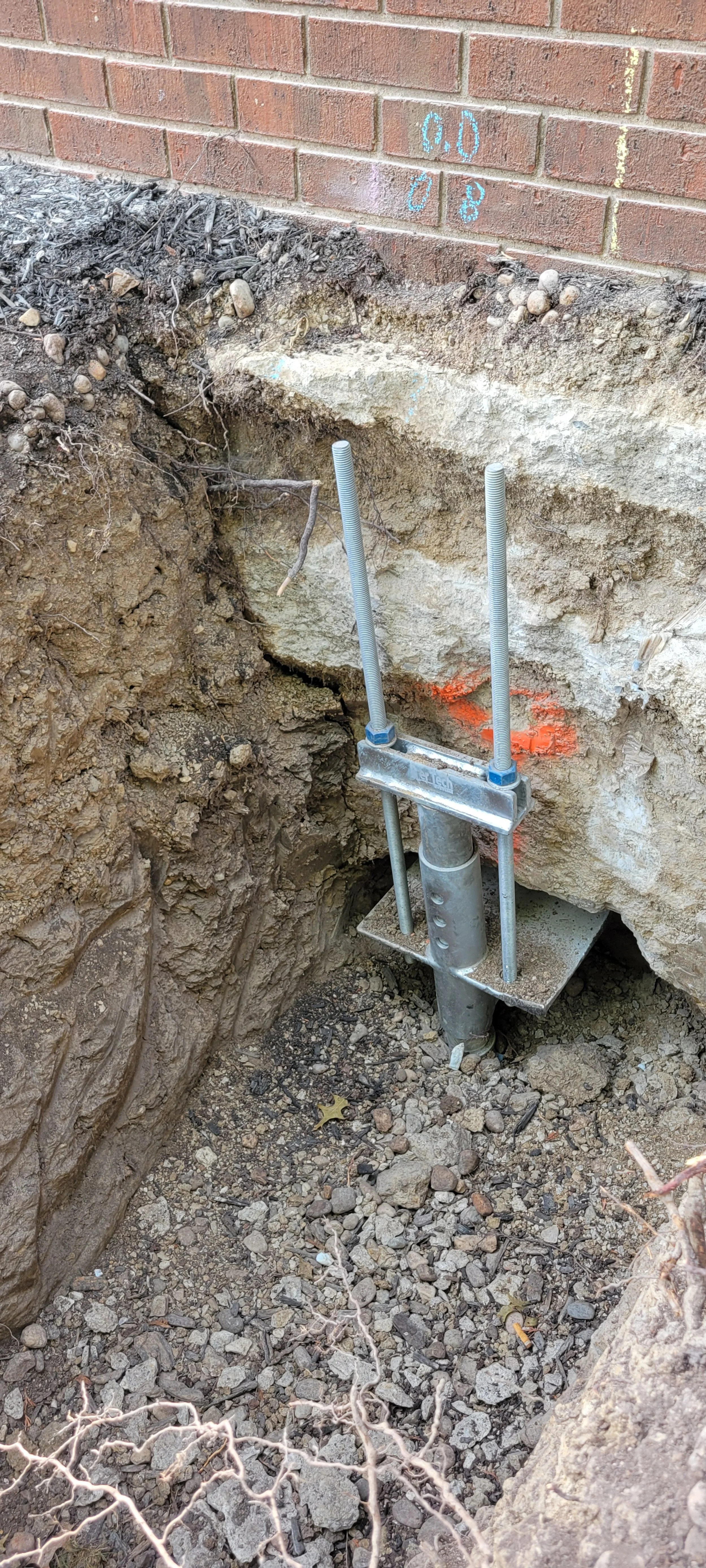
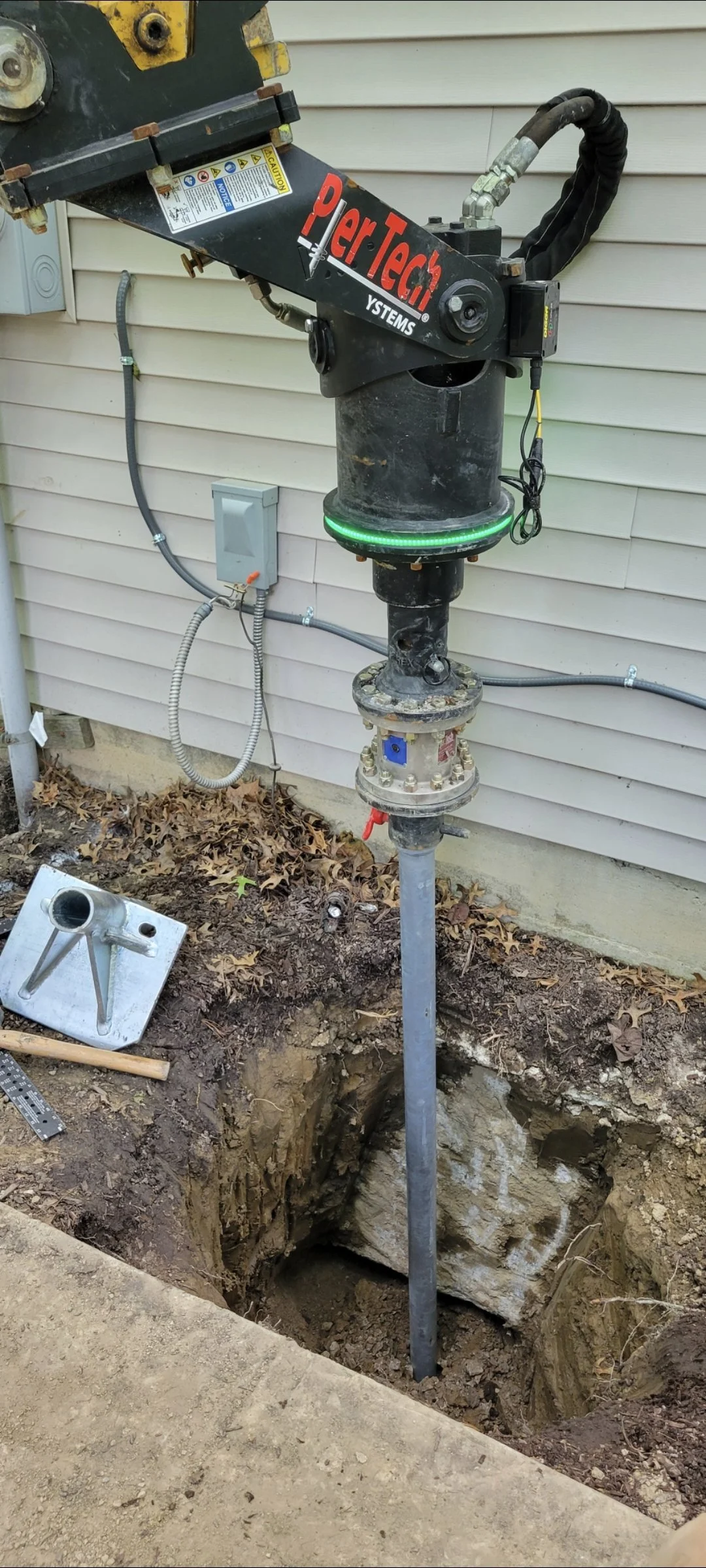

Sinking/settling foundations can cause a variety of structural issues, more than just unlevel concrete. Settling foundations can cause sticking windows, sticking doors, cracks in concrete, cracks in drywall, and even deem a structure unlivable. Helical pier installation and lifting is an effective solution. The process involves screwing pipe into the ground until load-bearing strata is reached. Brackets are then attached to the piers and mounted under the foundation. Hydraulic jacks are then placed on top to the piers and used to lift the foundation. The load is then transferred to the piers and the jacks are removed.
PRE-CONSTRUCTION PIERS
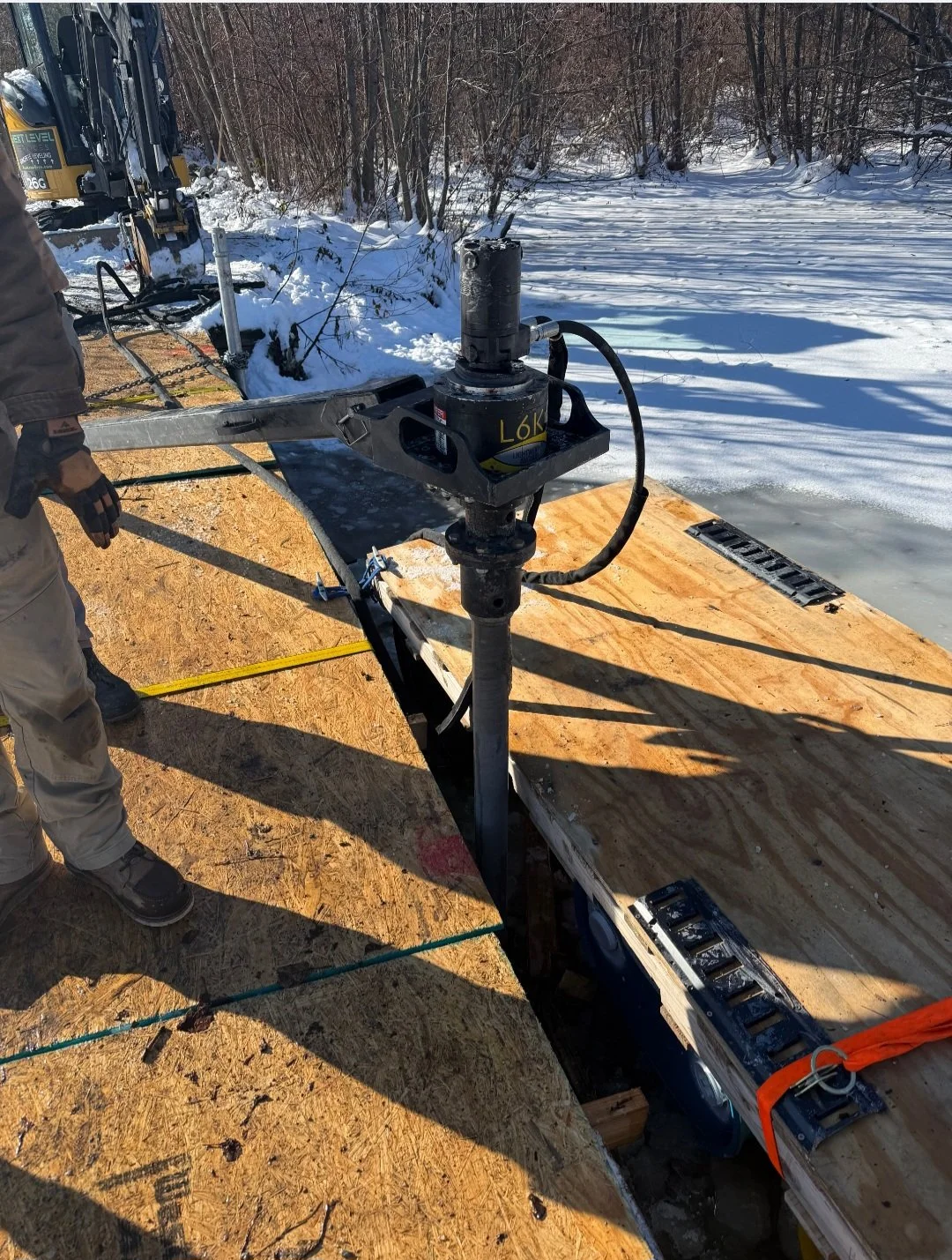
Helical piers are often used to stabilize foundations before homes are built. This is common to ensure stability, especially in areas near water, low-lying areas, and areas with soft soil. Helical piers are driven into the ground to load-bearing strata, bracket plates are mounted on top of the piers, and the footer is then poured on top.